

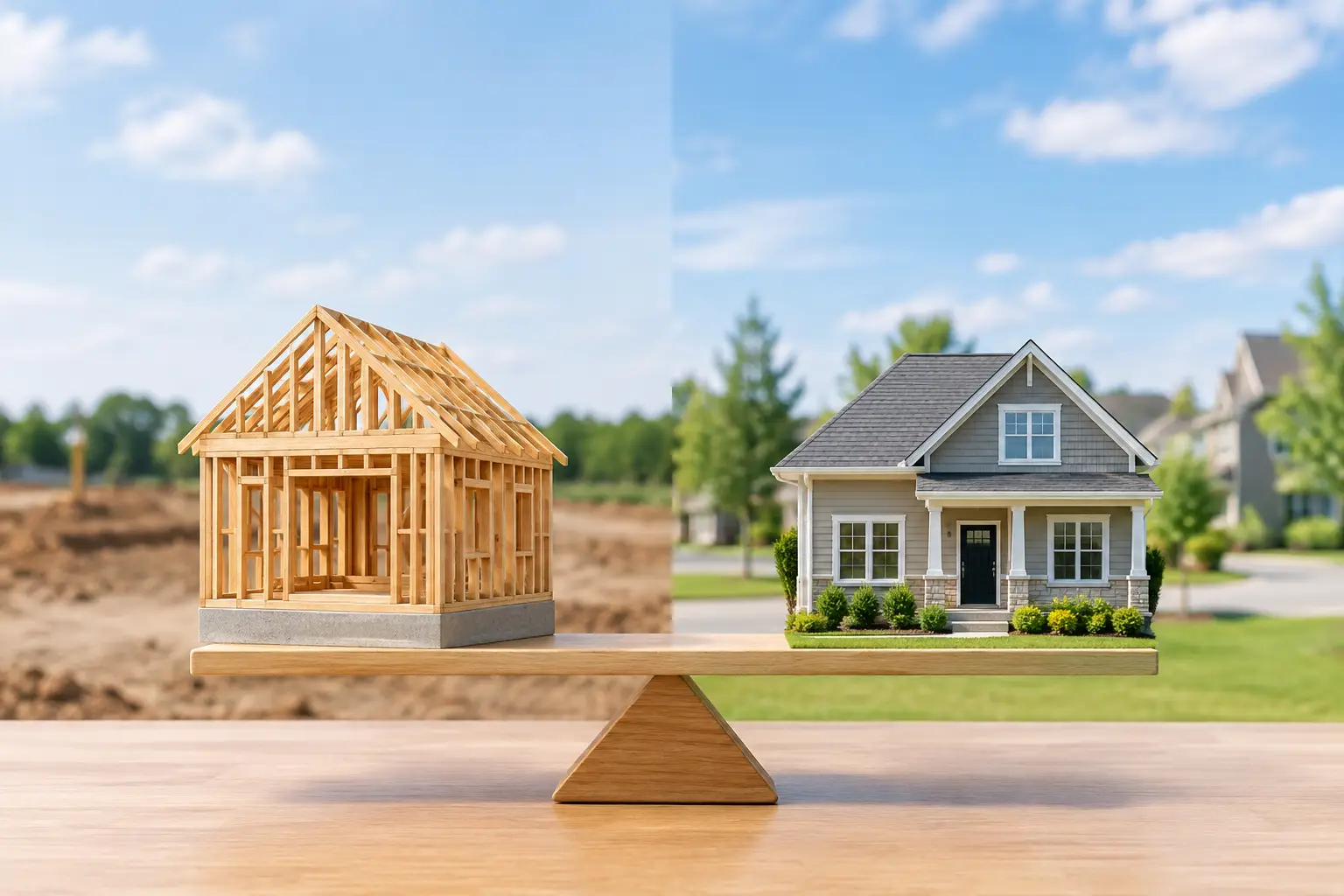
A model home can make the decision feel easy. Fresh paint, staged furniture, unused appliances, and a sales representative ready to show every finish can be compelling. But new construction versus resale homes is not a simple choice between new and old. It is a decision about budget certainty, location, timing, maintenance, financing, and how much control you want over the final product.
For buyers across Pennsylvania and New Jersey, the right answer depends on the property, the builder or seller, and the terms of the deal. A new home can offer efficiency and lower near-term maintenance. A resale home may provide a better location, more room to negotiate, and a clearer picture of what you are actually buying. The goal is not to chase the newest option. It is to choose the home that protects your financial position and fits your life.
New Construction Versus Resale Homes: The Real Cost Difference
The advertised base price of a new construction home is rarely the final price. Builders often price the home before lot premiums, structural options, design upgrades, appliances, landscaping, window treatments, and closing costs. A home that appears to fit the budget at the sales office can change materially once buyers select the features they consider essential.
That does not mean new construction is automatically more expensive. A resale home may need a roof, HVAC replacement, electrical work, drainage corrections, or kitchen updates soon after closing. Those costs deserve the same attention as builder upgrades. The difference is visibility: resale repair needs are often identified during inspections, while new-home costs can build gradually through the selection process.
Ask for a complete estimate before becoming emotionally attached to a lot or floor plan. It should include the base price, lot premium, every selected option, taxes, homeowners association fees, lender fees, and expected cash to close. In Pennsylvania and New Jersey, property tax estimates for newly built homes also require careful review. Early tax figures may be based on vacant land or incomplete assessments, not the eventual completed home value.
With resale homes, your offer price is usually closer to the true purchase price, although inspections may uncover legitimate repair needs. A disciplined buyer keeps funds available for immediate improvements and does not treat every visible imperfection as a reason to walk away. Some issues are routine ownership costs. Others are expensive defects that should change the negotiation.
Location and Lot Often Matter More Than Age
New construction frequently means newer communities on the edge of established areas, where available land still exists. That may bring larger homes, sidewalks, community amenities, and modern layouts. It can also mean longer commutes, fewer mature trees, active construction nearby, and years of additional building phases.
Resale homes often have the advantage of established neighborhoods. Buyers can see traffic patterns, school bus activity, parking, drainage, nearby commercial development, and the condition of surrounding homes. Mature landscaping and a larger lot may be part of the value. In many desirable Bucks, Montgomery, Chester, Burlington, and Mercer County locations, a resale home may be the practical path to a neighborhood that has little or no new inventory.
Do not assume every new lot is equal. A lot near a future road, retention basin, utility equipment, construction entrance, or commercial parcel may affect enjoyment and resale value. Review the community plan, not just the home site. The same caution applies to resale properties near busy roads, flood-prone areas, rail lines, or planned development.
A New Home Still Needs Inspections
One of the costliest mistakes a buyer can make is assuming a new home does not need an independent inspection. New construction is built by people, under time pressure, with multiple subcontractors working on the same project. Issues can include incomplete grading, missing insulation, improperly installed flashing, drainage concerns, electrical defects, or cosmetic items that should be corrected before settlement.
A phased approach is often worthwhile. Depending on the builder and construction timeline, buyers may arrange a pre-drywall inspection, a final inspection before the walk-through, and an inspection before the builder warranty expires. The builder’s municipal inspections and certificate of occupancy are important, but they do not replace an inspection performed solely for the buyer.
Resale inspections serve a different purpose. They provide an assessment of the home’s systems, structure, visible conditions, and likely maintenance needs. They are not a guarantee that nothing will fail after closing. They do give buyers a factual basis for deciding whether to proceed, request repairs, seek a credit, or renegotiate when a significant issue is discovered.
The contract language matters in both cases. Builder agreements can limit a buyer’s flexibility and may be written to favor the builder. Resale agreements also require careful attention to inspection deadlines, mortgage contingencies, appraisal terms, and what happens if repairs are not resolved. This is where experienced representation protects a buyer from treating a major commitment like a routine formality.
Financing Can Change the Best Option
Builder-affiliated lenders may offer rate incentives, closing-cost credits, or upgrades that make a new home more attractive. Sometimes those incentives are genuinely strong. Sometimes the lender’s interest rate, fees, or loan terms offset the advertised savings. Compare the full loan estimate with options from an independent lender before deciding.
Construction timelines can complicate rate locks. If a home is six, eight, or twelve months from completion, a standard mortgage rate lock may expire before closing. Extended locks are available, but they can cost more and need to be understood early. Delays caused by weather, labor availability, permits, or supply issues can create additional pressure.
VA buyers should not assume a new construction purchase is out of reach. VA financing can be used for eligible new homes, but builder participation, appraisal requirements, and closing timing must be coordinated correctly. A lender and agent who understand VA loans can help identify potential obstacles before a buyer invests time and money in selections and deposits.
Resale homes usually offer a more predictable closing timeline. Once inspections, appraisal, title work, and financing are underway, many transactions can close within a typical contract period. That can be especially valuable for military families, relocating buyers, and anyone working around a lease expiration or home sale.
Customization Versus Character
New homes appeal to buyers who want open layouts, modern insulation, energy-efficient systems, new appliances, and the ability to choose finishes. Customization can be useful, particularly when it allows a buyer to avoid a renovation immediately after moving in. Still, choices should be made with resale in mind. Overly personal finishes, unusually expensive upgrades, and the largest home in the community do not always return dollar for dollar.
Resale homes offer something new communities cannot manufacture overnight: character, established design, and a known record of how the property performs. A buyer may find hardwood floors, a finished basement, a fenced yard, a patio, or landscaping that would cost substantially more to add to a new home. The trade-off is that systems have age, layouts may be less open, and cosmetic updates may be necessary.
Try to separate wants from permanent value. Paint colors and light fixtures are manageable. A poor location, inadequate lot, problematic drainage pattern, or an impractical floor plan is harder to change. Buyers who stay focused on the elements that affect daily life and resale tend to make stronger decisions.
Negotiation Looks Different With Builders
Resale sellers often negotiate on price, repairs, closing dates, inclusions, and credits. The amount of leverage depends on competition, condition, days on market, and the seller’s motivation. In a balanced market, a well-supported offer can create meaningful value beyond the purchase price.
Builders may be less willing to reduce a published base price because nearby appraisals and future sales matter to them. They may have more flexibility with closing-cost credits, rate buydowns, upgrades, or inventory homes that need to close by a certain date. The best negotiation strategy depends on where the builder is in the sales cycle, how many homes remain, and whether the home is completed or still being built.
A builder representative works for the builder. They can be professional and helpful, but their job is to represent the builder’s interests. Buyers should have their own representation from the first visit whenever possible, before registration requirements or contract discussions create complications.
Make the Decision Based on Your Next Five Years
A new construction home may be the better fit if you value modern systems, low immediate maintenance, a specific floor plan, and can manage a flexible timeline and upgrade budget. A resale home may be the stronger choice if location, established surroundings, faster occupancy, and negotiating room matter most.
Before making either choice, review the full monthly payment, realistic cash-to-close number, tax estimate, inspection plan, and likely resale appeal. The best home is not the one that looks perfect during a showing. It is the one you can own confidently, maintain responsibly, and sell without regret when your next chapter begins.
Social Cookies
Social Cookies are used to enable you to share pages and content you find interesting throughout the website through third-party social networking or other websites (including, potentially for advertising purposes related to social networking).